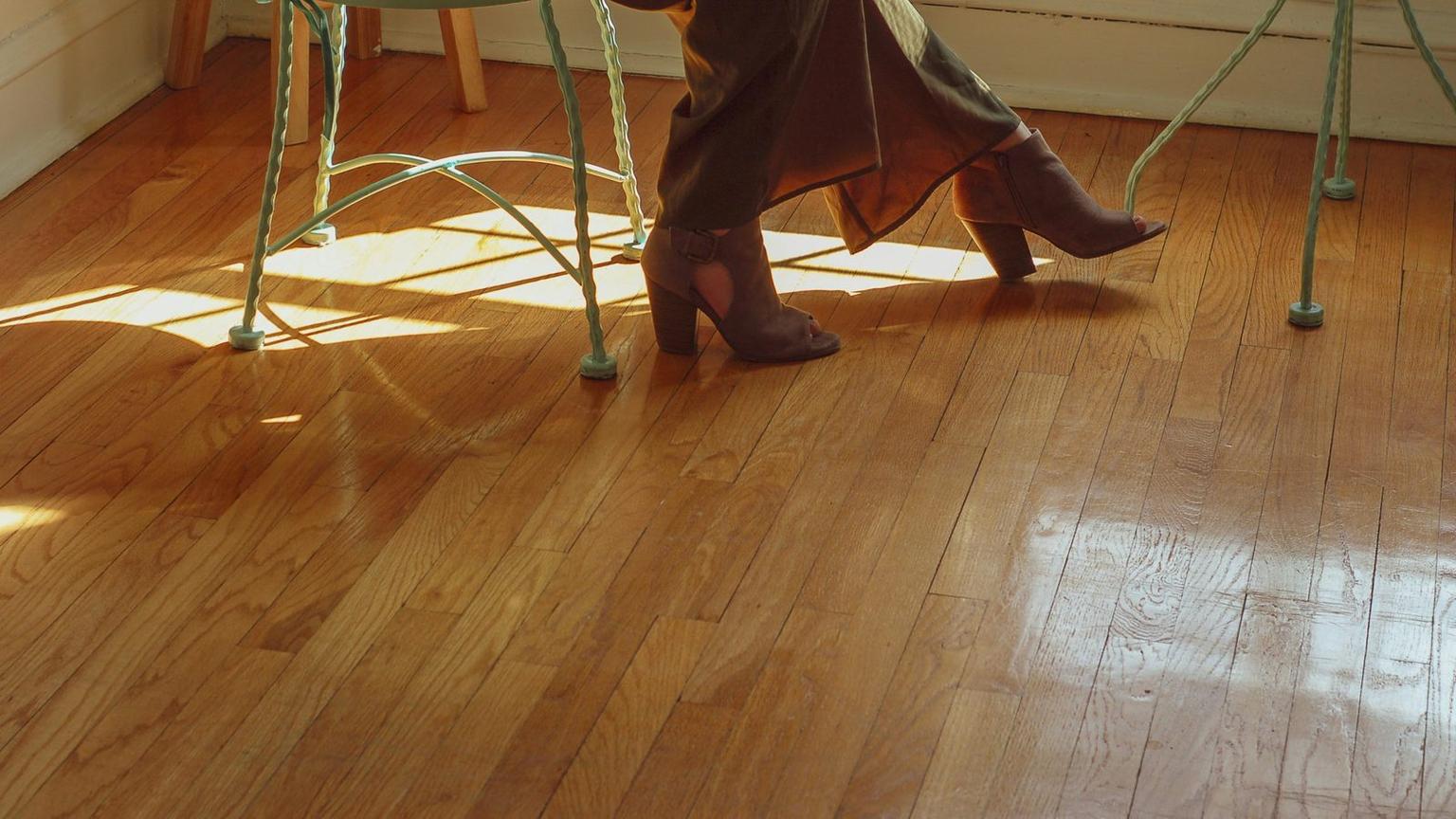
You run the dust mop, follow it with the damp one, and twenty minutes later the floor has cloudy stripes everywhere the mop went. There's a hazy patch by the kitchen sink. The hall has a dull lane down the middle that no amount of mopping changes.
Almost nothing about that is the wood. It's what's sitting on top of the finish, plus a little of what's been scratched into it. Both can be slowed way down with a better routine.
Why the shine goes
Grit first. Tiny bits of sand and dirt come in on shoes and paws all day, and every footstep drags them across the finish like fine sandpaper. The scratches are too small to see one at a time, but together they scatter light, and a scattered-light floor reads as dull. Entryways and hallways go first because that's where the grit lands. Sandy soil from a backyard dig or a muddy ballfield does a lot of the damage.
Product film is second, and it's the one people cause by trying harder. More cleaner doesn't mean cleaner floors. Extra product dries into a thin layer, and so do cleaners made to put a shine on tile or vinyl. One layer you won't notice. Ten layers look like fog, and they hold onto dust, so the floor looks dirty again a day after you mop.
Then there's the weather. Wood swells a little when the air is wet and shrinks when it's dry, and our summers are humid enough to notice. Those small movements change how the finish reflects light, and damp air makes dust cling. The EPA's general advice for indoor moisture is to keep relative humidity under 60 percent, ideally somewhere between 30 and 50. If boards start cupping, buckling, or opening up gaps, cleaning isn't the problem. Look for a leak, a sweating pipe, or an appliance drip and fix that first.
A routine that doesn't hurt the finish
- Get the loose dirt up dry. Vacuum on the hard-floor setting or use a microfiber dust mop, and pick the debris up at the end of each pass so it doesn't get pushed into the next room.
- Look before you add any water. Worn spots, bare wood, or open gaps between boards mean moisture can get under the finish.
- Use a cleaner made for your floor's finish, measured the way the label says. If you know the flooring brand, its care guide is the one to follow.
- Use a microfiber mop that's damp, not wet. Wring it until it barely leaves a trace of moisture behind.
- Do small sections, with the grain where you can.
- Swap or rinse the pad once it's dirty. A dirty pad just moves the dirt around and leaves streaks.
- Let the floor dry completely before you decide it's streaky. Damp wood shows mop marks that disappear once it dries.
For weekly upkeep, that's honestly all it takes: dry pass, spot-clean anything sticky, damp pass when it needs one.
What stays in the closet
Steam mops put heat and moisture into the floor at the same time. Some manufacturers say no outright, and a picture of a wood floor on the box isn't permission. Check your flooring's warranty before you use one.
Vinegar gets recommended everywhere because it's natural. Natural says nothing about what your finish can take. The same goes for baking soda mixes, dish soap, oil soaps, waxes, and polishes. Polish and wax are the worst offenders for that foggy look, since each coat adds another layer on top of whatever was already there. Our take is simple: if the finish's manufacturer didn't call for it, it doesn't go on the floor.
Pets and the busy spots
Water bowls splash, and the same spot getting wet every day is worth preventing. Put a mat under the bowl that's safe for hardwood and wipe up spills when you see them. Pet accidents need fast attention too. Pick up the mess, clean per the flooring maker's directions, and resist the urge to flood the spot to kill the smell. A soaked board is a worse problem than a faint odor. Rugs and mats at the doors catch grit before it reaches the hallway, as long as the rugs themselves get cleaned now and then.
When the gray lane isn't scratches
A common one: someone has us out for carpets upstairs and asks about the hallway downstairs, which has gone gray and dull along the path everyone walks to the kitchen. They're sure it needs refinishing. Then it comes out that a shine product has been going on it for a couple of years.
Our hardwood cleaning is a pH-neutral, low-moisture clean that's safe on finished, engineered, and prefinished floors. We don't sand, refinish, or put down polish or any new coat. In a hallway like that, a lot of the gray is usually built-up product, and once it's cleaned off the lane can look much closer to the rest of the floor. Scratches right inside the front door stay. Cleaning doesn't remove scratches, and where the finish has worn through to bare wood, you need a refinisher.
If you want more on keeping wood floors looking right, we put a lot of it on our hardwood floor care site. The local service is on the hardwood floor cleaning page, and there's $50 off it on the coupons page right now.