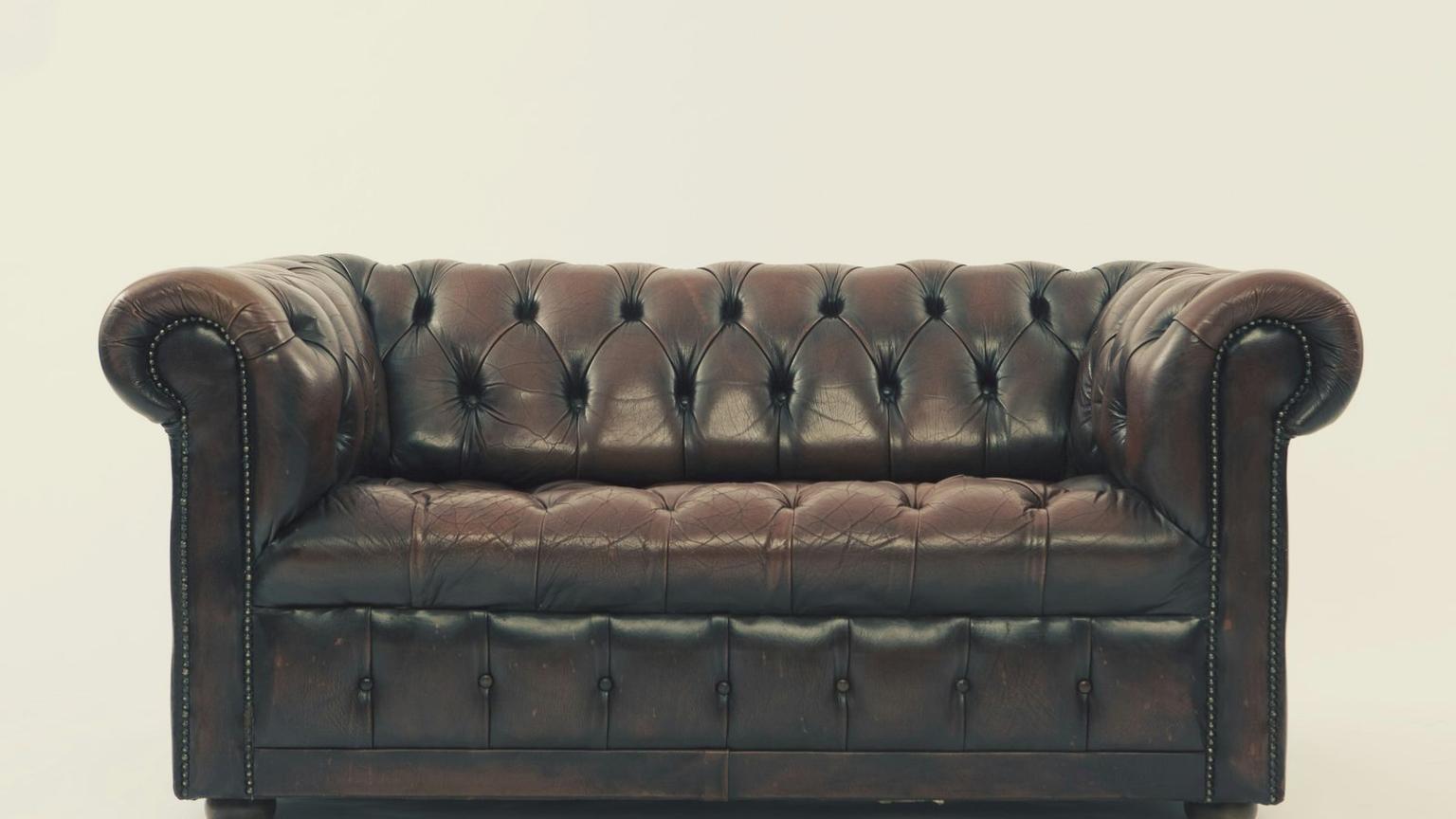
Find the tag or the paperwork before you put anything on a leather couch. If it's still under warranty, the manufacturer's care instructions win, and using the wrong product can cost you that coverage.
Leather is easier to live with than most fabric. It's less porous, so a spill usually sits on top long enough to wipe away. What hurts it is drying out, heat, sun, and the cleaning products people grab from under the kitchen sink.
Keep these off it
Bleach and ammonia are out, along with window cleaner, hair spray, acetone nail polish remover, shoe polish, and anything sold as a sanitizing or alcohol-based cleaner (there's one small exception for ink, below). Olive oil, too, even though it gets recommended online all the time; it can harm the finish.
Safer picks are a little dish soap in water, diluted vinegar, baking soda, and products made for leather.
The everyday clean
- Vacuum with the brush attachment. Get the cushions, their undersides, the edges, and the crease where the seat meets the back. Crumbs in that crease act like grit every time someone sits down.
- Mix warm water with a few drops of dish soap. Dip a soft cloth and wring it until it's barely damp. Too much water can leave a mark of its own.
- Wipe in small circles. Back-and-forth rubbing wears at the surface.
- Go over it right away with a dry cloth, top to bottom. Don't skip this one. Water left sitting on leather weakens it over time and can lead to cracking.
For a spot that needs more, a mix of vinegar and water works. Try it on the back of the couch first.
Grease, ink, and dark marks
For grease, blot what you can with a dry cloth, then sprinkle baking soda on the spot. If it's already dried in, leave the baking soda for a few hours so it can pull the oil up, then brush it off with a rag.
Ink and small mildew spots respond to rubbing alcohol on a cotton swab. Dab the mark only, gently, and stop when it lifts. This is the one time alcohol touches the couch, and only on that spot.
On white or cream leather, a paste of equal parts lemon juice and cream of tartar can fade dark marks. Leave it ten minutes and wipe it off with a damp cloth.
Test every one of these somewhere hidden first. Same goes for store-bought stain removers, some of which do more harm than the stain did.
Conditioning is most of the job
Here's the honest version: once a leather couch is clean, home care is mostly conditioning. Once or twice a year:
- Vacuum, then spray a leather cleaner onto a cloth. Spraying it straight onto the couch can leave spray marks.
- Start at the top and work down so you don't get uneven patches. Get the seams and edges.
- Wipe off any extra cleaner.
- Put a small amount of conditioner on a clean cloth and work it in thin. Don't soak it.
- Give it an hour or more before anyone sits.
Between treatments, keep the couch out of direct sun and away from fireplaces and heaters. Heat dries leather out, and dry leather cracks.
The one thing cleaning can't fix
A question we hear on upholstery jobs: there's a fabric sectional to clean, and next to it sits a cream leather recliner by a west-facing window. The sun side has faded and gone stiff while the other arm still looks new, and the owner asks if we can clean the color back in. We can't, and we'll say so. Cleaning doesn't undo sun damage. What helps is moving the chair a few feet out of the afternoon light and conditioning it on a schedule so the rest of it doesn't go the same way.
A fabric sectional, dining chairs, a fabric ottoman: that kind of furniture is what our upholstery cleaning is built for. If you've got fabric pieces in the same room as the leather, tell us what they are on the contact page and we'll get back to you.