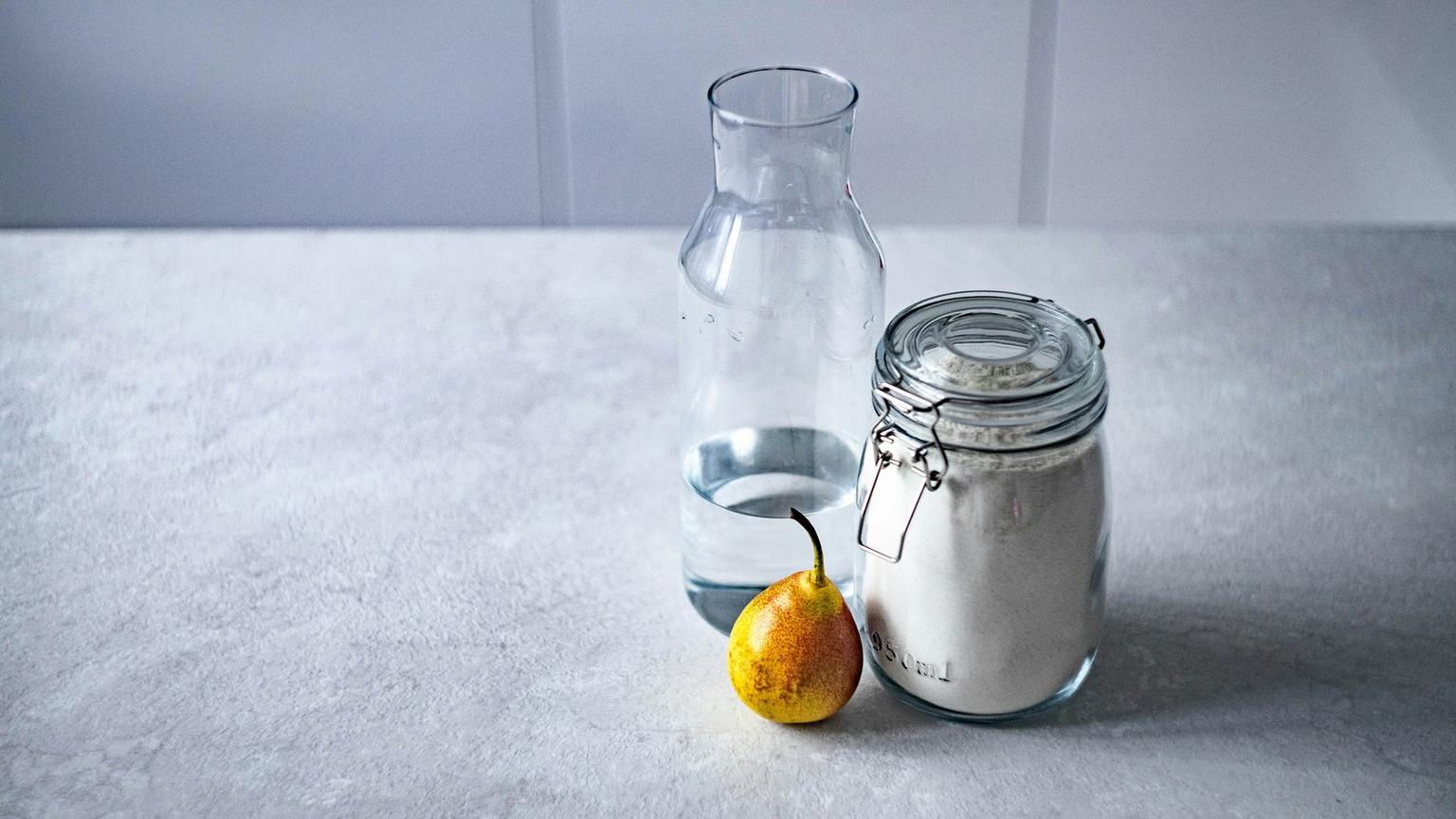
One cup of white vinegar, two cups of warm water, one teaspoon of clear dish soap. That's the whole recipe, and for a fresh spill on a synthetic carpet it works about as well as most of what's on the store shelf.
It's a spot cleaner, though. Mixing a gallon of it and going after the whole living room is how people get into trouble.
The mix
In a clean spray bottle:
- 1 cup white vinegar
- 2 cups warm water (distilled if your tap water is hard and leaves white spots on the faucet)
- 1 teaspoon clear, mild dish soap
Cap it and swirl gently. Shaking hard makes it foam.
The vinegar cuts grime and knocks down odor. The soap lifts grease and food. The water is there so neither one is strong enough to hurt the fibers.
A lot of recipes online add a couple of teaspoons of baking soda to the same bottle. We'd leave it out. Vinegar and baking soda cancel each other, so most of what you get is fizz and salty water, and a capped bottle that's still fizzing can pop its top. If you want baking soda for odor, sprinkle it dry on the spot later, after the area is dry, and vacuum it up.
We'd also skip the drops of lavender or eucalyptus oil some recipes call for. Oils can leave an oily mark, and a few of the common ones aren't great around cats and dogs.
Mix it fresh when you need it. It doesn't keep its punch sitting under the sink for a month.
Test it before you trust it
Pick a hidden spot: inside a closet, under the edge of a bed. Spray a little, blot with a white cloth, and wait until it dries. If the color comes off on the cloth or the spot looks different once dry, don't use it on that carpet. Wool and some natural fibers react badly to vinegar, so test those every time.
How to use it
- Scrape up anything solid first with a spoon or a dull knife.
- Blot up as much liquid as you can with a dry white towel.
- Mist the solution lightly. You want the stain damp, not soaked.
- Blot from the outside edge toward the center so the spot doesn't spread.
- Rinse by misting plain water and blotting again. This step gets skipped a lot, and it's the one that keeps soap from staying in the carpet.
- Press a dry towel down hard, then let the area air dry with a fan on it.
- Vacuum once it's dry to lift the fibers back up.
Don't scrub. Scrubbing untwists the yarn and leaves a fuzzy patch that looks like a stain even when it's clean.
Where it works, and where it doesn't
It does fine on fresh juice, coffee, soda, milk, and food spills. Mud too, once the mud dries and you've vacuumed up the loose part. It's handy for a quick touch-up in a hallway before company comes.
It struggles with anything old or deep. Set-in wine, grease, and old pet urine are past what a spray bottle can reach, and urine in particular needs an enzyme treatment that gets to the pad (here's why a spray bottle can't reach it).
The real risk is soap. Use more than a teaspoon, or skip the rinse, and you leave a sticky film behind. That film grabs dirt from every sock and shoe that crosses it, and two weeks later the spot you cleaned is darker than the stain was. We see it all the time: a ring of gray around a spot that was cleaned "really well." If that's happened to you, more homemade cleaner won't fix it, because the problem is residue from the last round.
It's also no substitute for cleaning whole rooms. Going wall to wall with a spray bottle and towels puts down uneven moisture and leaves you with patches. For that, professional carpet cleaning gets the whole floor at once with no soap left behind.
If you've got a few rooms that have reached that point, our current coupons include three rooms for $88 (based on 300 square feet). They're on the coupons page.